





We spend years learning how to make sense of the world. But when it comes to telling someone they’ve hurt us, asking for what we need or finding our way back after an argument, many of us reach adulthood unsure where to start.
In a survey of 1,012 Australians commissioned by Relationships Australia NSW, only one in three people recalled being taught how to handle difficult conversations in relationships while growing up.
So where did we learn what to do when we felt hurt, jealous or unsure? And where do young people turn today when they have those same questions?
In No One Taught Us How to Do This, the third episode of our podcast Are We Good?, host Marina Pliatsikas explores how we learn to relate to other people, what can happen when we’re left to work it out for ourselves, and what we can pass on to the next generation.
Listen now:
We start learning about relationships before anyone explains them
As children, we notice what happens when an adult gets angry. We notice who comforts us when we’re upset, and whether anyone comes back to talk after an argument. Over time, those moments can shape what we expect from the people closest to us.
Evolutionary anthropologist Dr Anna Machin describes dependable care as giving children a “secure base”. Knowing someone will be there for us when things get difficult can give us confidence to explore the world and form connections of our own.
For relationship researcher Dr Raquel Peel, the lessons she carried into adulthood were complicated. She was abandoned as a baby in Brazil and adopted into a family she describes as deeply loving. She remembers feeling loved by the parents who chose her while also carrying a fear that the people she loved would eventually leave.
In adult relationships, Raquel sometimes avoided talking about her feelings to protect herself. Over time, she saw how that habit could get in the way of the closeness she wanted. It’s a pattern she now studies professionally as relationship self-sabotage.
The stories we grow up with shape what we expect from love
Fairy tales and romantic comedies often end when two people find each other. We see less of what happens afterwards, when they have to talk about money, share responsibilities or work out how to spend time with both their families.
Dee Salmin, host of triple j’s The Hook Up and author of It’s Not Love, Actually, remembers wanting a boyfriend so badly that being single started to feel like evidence that something was wrong with her. Looking back, she can see how that pressure led her to overlook warning signs and make herself smaller to keep a relationship going.
“I kinda look at love as a skill,” Dee says. For her, it involves choosing how to show up for people and continuing to learn how to do that across friendships, family and romantic relationships. Her own understanding of a fulfilling life has changed, too. She can love her partner deeply and know that her life would still be full of love if the relationship ended.
What happens when young people look online for answers?
How do I tell someone I like them? What do I do after our first fight? How do I tell someone I’m upset? These are ordinary questions when you’re figuring out relationships. It can feel easier to ask a stranger online than risk being laughed at by a friend.
Raquel describes a student’s research into Reddit conversations where boys and young men were asking for relationship advice. Some replies encouraged them to treat a disagreement as a challenge to their authority. For Raquel, the missed opportunity was that these young people were already reaching out. A response as simple as asking whether they’d told the other person how they felt could have opened up a different conversation.
Ben Vasiliou, CEO of The Man Cave, sees a similar issue in the messages some boys encounter from influencers in the manosphere. They can make dominance and control sound like requirements for being a man. A boy may feel pressure to go along with those ideas because he assumes his friends agree, even when several of them are privately uncomfortable.
What young people learn about whose feelings matter, how to respond to rejection and what they can expect from a partner has consequences. Respectful relationships education is part of preventing gender-based violence. It gives young people a chance to question ideas about entitlement and control while they’re still forming their own expectations of relationships.
Boys need opportunities to talk and practise
Parenting expert Dr Justin Coulson points out that many adults were also raised with limited examples of how to handle conflict or talk about feelings. Schools have an important role, and Ben argues that teachers need time, training and support to make respectful relationships part of everyday school life. Parents, coaches and community leaders can help those conversations continue beyond the classroom.
At The Man Cave, facilitators share their own experiences and invite boys to talk about what’s happening in their lives. Ben recalls boys being surprised by what their mates were dealing with because they’d never spoken about it together.
In a survey Ben describes in the episode, 31% of boys said they felt able to talk to their mates about problems in their lives. He also shares a separate workshop finding. After taking part, 75% of boys said they felt more comfortable talking to their mates about a problem.
For Ben, part of the work is giving boys a wider picture of what being a man can look like. Courage and strength can sit alongside compassion, respecting boundaries and being able to hear a no. Boys can practise what to do when they feel hurt or rejected, including how to talk about it without taking it out on someone else.
Children see how we handle the moments we get wrong
Justin remembers hearing himself in the background of a video his daughter recorded at home. He’d been speaking to another of his daughters and thought he was being helpful. On the recording, he could hear how harsh he sounded.
Raquel and her husband have had to pay attention to their habits, too. Early on, they sometimes went days without talking about what was bothering them. Becoming parents made them think about what their children were seeing. Some conversations still happen in private. Their children can also see them come back to an everyday disagreement, apologise and show affection afterwards.
Aunty Julie Wilson, Relationships Australia NSW’s Aboriginal and Torres Strait Islander Practice Specialist, describes how this responsibility is shared in her community. Aunties, uncles and other adults help guide children and show them how to care for others.
It’s never too late to learn a different way
Raquel remembers how it felt to begin trusting that her husband loved her as she was. Getting to that point also took years of working out what she could expect from a healthy relationship, what she needed to say out loud and what she and her partner could do differently together.
Some of that learning happens in ordinary moments. We might come back to a conversation we’ve been avoiding, ask a friend whether they want advice or someone to listen, or follow an apology with a change the other person can see.
Moving in together, getting married or making another commitment can bring expectations into view that we’ve rarely needed to discuss. One person may assume they’ll share money, while the other expects to keep separate accounts. Each may have a different picture of what it means to make time for family.
We can start by asking what each of us saw growing up, what we assumed we’d do and what feels right for us now. If we’d like support to talk through those questions before taking that next step, our Prepare and Enrich pre-commitment counselling service offers an online assessment and three sessions with a counsellor.
If we grew up in a family where everyone went quiet after an argument, we might still find ourselves doing the same thing years later. Learning a different response can start with a sentence we rarely heard growing up. “I’m still upset, but I want to talk about it. Can we try again after dinner?” Saying it might feel awkward the first few times. Coming back after dinner gives us a chance to practise what happens next.
Keep learning in Episode 3 of Are We Good?
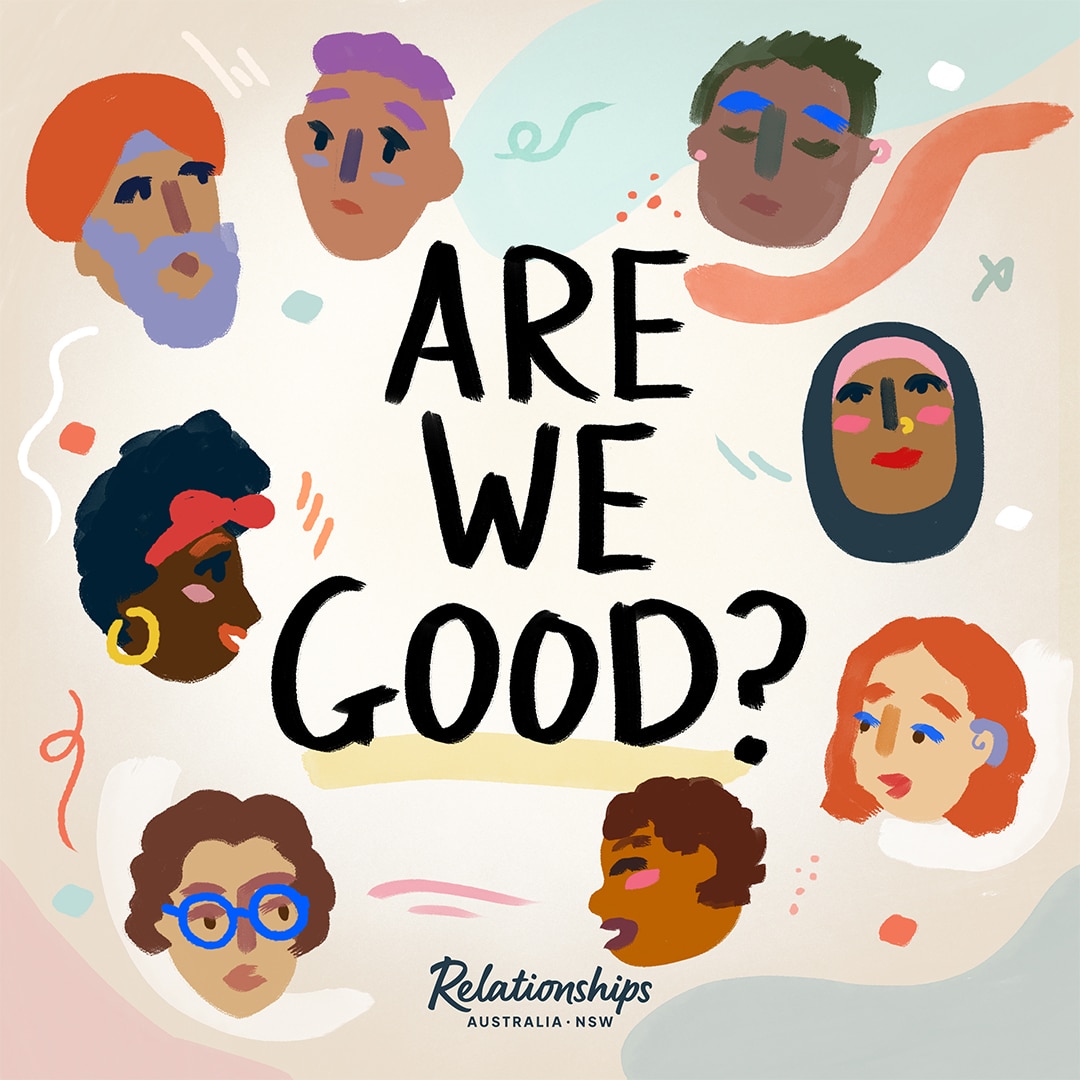
“No One Taught Us How To Do This” looks at how we learn to be with other people and what we can still learn as adults.
Episode 3 of Are We Good? is out now. Find us wherever you get your podcasts.

 English (UK)
 العربية
 简体中文
 香港中文
 Ελληνικά
 Italiano
 한국어
 ਪੰਜਾਬੀ
 Српски језик
 ไทย
 Tiếng Việt
 Facebook
 Twitter
 Linkedin
 Email