




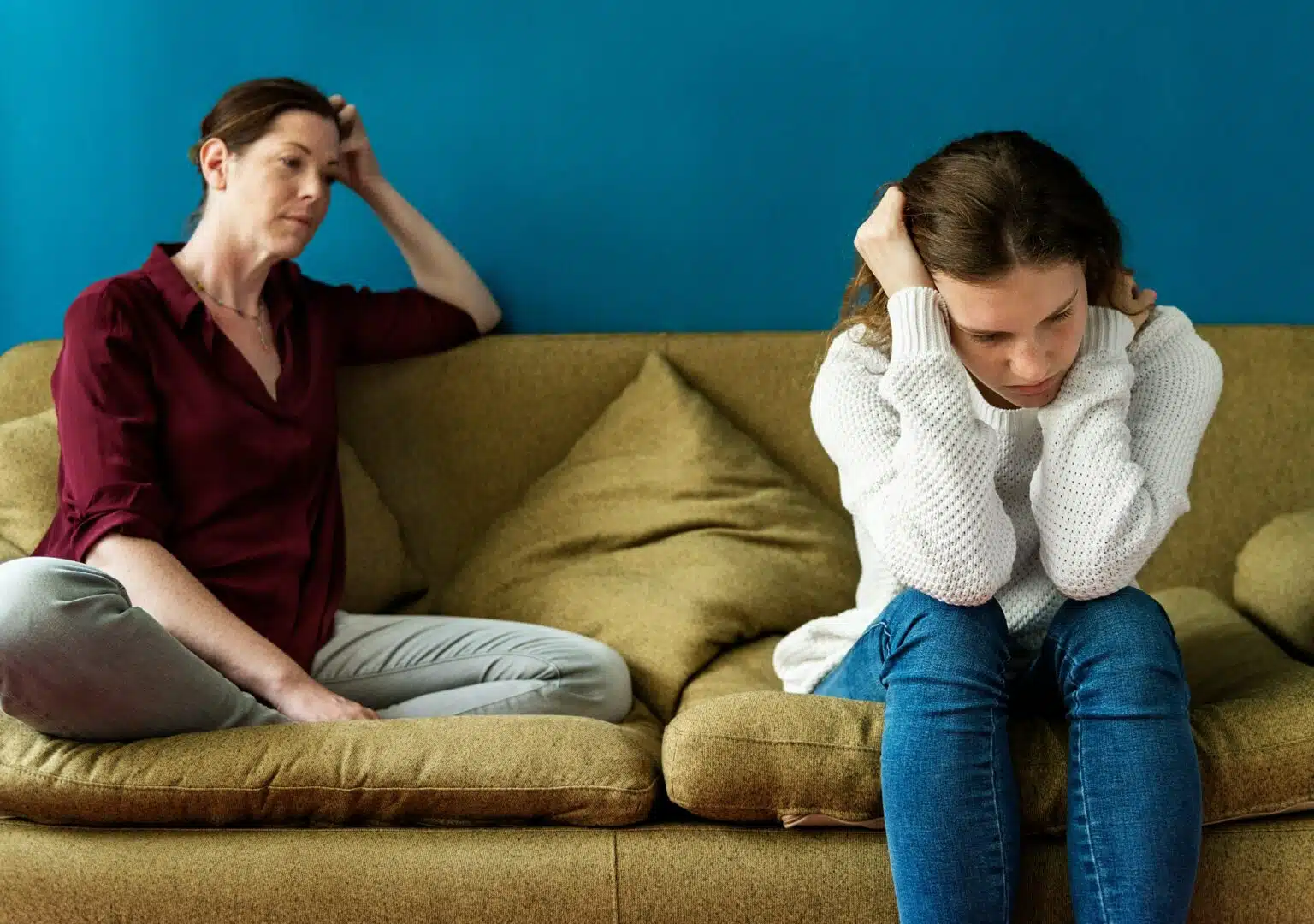
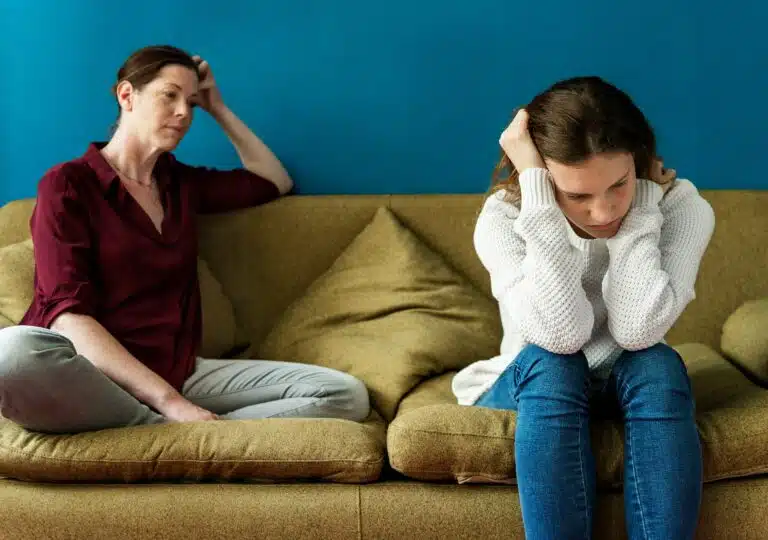
Family estrangement has been in the headlines recently, from Brooklyn Beckham’s reported distance from his family to Prince Harry and Meghan Markle stepping back from the royal family. While celebrity stories generate attention, estrangement is something many everyday families experience. The fallout may look less dramatic than what makes the news, but the impacts and sense of loss are just as real.
What might look sudden from the outside usually develops over time – often compounded by years of unresolved conflict, shifting boundaries and changes within the family system.
To better understand why relationships become estranged – and what can be helpful to those involved – we spoke with Lucy Butler and Chris Stretton, Senior Couple and Family Counsellors at Relationships Australia NSW.
What is family estrangement?
Family estrangement involves reducing or completely cutting off contact between family members, either temporarily or long term. It goes beyond tension or disagreement, usually involving a clear boundary that limits or ends communication.
In counselling, estrangement is often understood as a response to feeling unsafe, overwhelmed or unheard within the family dynamic.
“Something has happened in the family system where a person feels really unsafe,” Lucy explains. “They might cut themselves out of that system with no contact, or they might put a strong boundary in place.”
Importantly, estrangement is rarely about a single event. It typically reflects patterns that have been built over time.
Most ruptures develop through ongoing relational dynamics that haven’t been addressed, safely discussed or resolved.
While we are mainly talking about family estrangement in this article, we know similar dynamics can occur in close friendships. Some people have a chosen family of friends. When a long-standing friendship ends or contact is cut off within a friendship group, the sense of loss can be just as significant.
Why do families become estranged?
There is rarely one clear cause of family estrangement, but common factors that contribute can include:
- Long-standing criticism or conflict
- Differing values, beliefs or lifestyles
- Parenting disagreements, especially after separation
- Disputes around ageing parents, finances or inheritance
- Experiences of trauma, neglect, violence or feeling emotionally unsafe
- Major life transitions can also act as tipping points. Becoming a parent, entering a new relationship, or navigating a separation can bring earlier family patterns into sharper focus.
“There are usually patterns of relating that have been there for a long time. It’s not often a sudden decision – there are smaller events that have led to that moment,” Lucy notes.
When communication hasn’t felt safe or productive, distance can begin to feel like the only viable option.
If you’ve been cut off
Being cut off by a family member can feel disorienting and deeply painful. Many people describe shock, anger, confusion and a strong urge to resolve the conflict immediately.
Lucy and Chris frame this experience as a form of grief.
“We work with it as grief work – as living grief. There are a whole lot of emotional stages you’ll go through.”
Unlike bereavement, estrangement can involve ongoing uncertainty. The person is still alive, and the person cut off may hold onto hope for reconnection. That can make the emotional process, including acceptance, more complex.
If you’ve been cut off, it can help to:
- Respect the boundary that has been set, even if you disagree with it
- Focus on your own emotional processing
- Reflect on your actions and behaviours. Are there things that you did or didn’t do that might have contributed to the cut off?
- Stabilise your nervous system through regular self-care and support
Chris and Lucy also highlight the value of private rituals that honour the relationship while still respecting the boundary that’s in place.
Some parents whose adult children have cut contact choose to continue writing birthday cards or letters they don’t send. Others keep a journal, create a memory box, or privately mark significant dates. These rituals allow someone to acknowledge the importance of the relationship without breaching the other person’s request for space. Lucy says this approach can be particularly helpful in parent-child estrangement.
It is also possible for people who have been cut off to seek out a sense of belonging within supportive relationships with people with whom you share core values and interests.
“Holding onto hope and doing the work can be important for parents whose children have cut them off.”
In other types of estrangement – for example between siblings, extended family members or former partners – there can also be value in doing the personal work and gradually letting go. Letting go doesn’t mean the relationship doesn’t or didn’t matter, but it may mean recognising that holding onto hope for a specific outcome is preventing you from moving forward in your own life.
Chris adds that reflection is beneficial regardless of what happens next.
“Being able to process that loss puts you in a better place – whether you reconnect or not – because you’ve had a chance to work through some pretty raw emotions.”
If you’ve chosen to step away
Limiting or ending contact is usually a protective decision rather than a punishment to the other person. It’s common to feel relief alongside guilt, grief or pressure from others to reconcile.
In counselling, the goal is not to tell someone what to do, but to walk alongside and support people as they work through the impact of the ruptures in their family relationships.
“It’s about providing a safe space to unpack those experiences,” Chris explains.
Even when estrangement feels necessary, it can still feel like a loss. Experiencing grief doesn’t necessarily mean you’ve made the wrong decision; it simply reflects the significance of the relationship you shared.
A safe space will also be key if you choose to explore reconnecting with family members after stepping away.
If you’re stuck in the middle
Being caught between estranged family members can be exhausting. You may feel pressured to take sides, manage communication or work to repair the relationship.
These dynamics aren’t limited to families. Similar pressures can arise in friendship groups when two people fall out, leaving others feeling caught in between.
Chris notes that when two people are in conflict, it’s common for a third person – like another family member or mutual friend – to get pulled in.
“When two people are in conflict, involving a third person (whether consciously or unconsciously) can relieve some of the tension between them. Being that third person can be an enormous amount of pressure.”
If you’re in this position, it can help to:
- Set clear limits around conversations that make you uncomfortable. For example: “I care about both of you, and I don’t feel comfortable discussing this.”
- Avoid becoming a messenger between parties. It’s okay to say, “I’m not able to pass messages between you – that’s something you’ll need to raise directly.”
- Be transparent about shared events or invitations. If you’re hosting something, you might say, “I’m organising a family catch up and I’ll be inviting you both. It’s up to you whether you’d like to come.”
- Remind yourself that it’s not your role to fix the estrangement. You can maintain your relationship with both people without taking responsibility for repairing the rupture.
Be mindful of protecting your own wellbeing when you’re feeling caught in the middle – it’s not an easy place to be.
When children are involved
Children are often more aware than adults realise. Even if conflict isn’t openly discussed, they notice changes in tone, behaviour and routines.
Lucy stresses the importance of age-appropriate honesty.
“Kids pick things up. It’s really important to be transparent with them in a way that matches their age.”
Younger children may need simple explanations and reassurance, while older children and teenagers may have more complex questions. It’s also important to avoid speaking negatively about a parent or close family member in front of a child.
“A child is half of each parent. If they hear one parent criticised, on some level they can feel like they’re being criticised too,” Chris says.
Giving children space to express their feelings and providing them with validation and compassion, without pulling them into adult conflict, can reduce longer-term and intergenerational impacts.
Can estrangement change over time?
Sometimes estranged families reconnect, sometimes they develop a new, more limited form of contact, and sometimes estrangement remains.
Reconciliation is more likely when both parties are open and boundaries have been respected.
“When people are open to it – that’s when reconciliation can happen,” says Lucy.
Family counselling processes are gradual. Joint sessions aren’t rushed and emotional safety is always prioritised.
Chris also highlights the importance of keeping expectations realistic.
“Often when we’re in pain, we want the other person to change to stop our pain. This is a natural tendency, but it steers us away from the reality that the other person changing is largely out of our control.”
You may not be able to determine someone else’s choices, but you can work on your own responses and how you want to move forward.
Seeking support
Family estrangement is complex and there’s no one-size-fits-all approach, but professional support can be helpful for:
- Processing grief and anger
- Clarifying boundaries
- Understanding patterns within the family system
- Preparing for possible reconnection
- Making peace with no contact
Family counselling is structured and consensual. All participants must agree to be involved. Typically, counsellors will speak with family members individually first before bringing people together in the same session. This helps ensure that everyone feels emotionally safe and ready.
In some situations, one family member may need to help coordinate the initial contact if others are not on speaking terms. However, over the course of counselling, the aim is to shift that responsibility away from one “middle person” and redistribute communication more evenly across the family system.
Joint sessions, when appropriate, are approached gradually. Sometimes reconciliation is possible, and other times the work focuses on boundaries and acceptance.
Lucy says that when families are able to work through estrangement together, the process can be incredibly healing.
“When there’s been family cut off and then repair happens in the room, it’s very moving. If you do the work, the relationship can be stronger.”
Not every estrangement will end in reconnection, but with the right support, it’s possible to find a way to move forward.
If you’re navigating family estrangement – whether you’ve been cut off, chosen distance, or feel caught in-between – support is available. We offer individual and family counselling to provide a safe, structured space to explore your options and move forward, whatever that looks like for your situation.
Related Services & Workshops
Counselling.Families.Life Transition
Family Counselling
Our trained and compassionate family therapists provide Family Counselling services online and in-person throughout NSW. Family Counselling provides a safe space to address problems, hear each other’s perspectives, overcome difficulties, improve communication, and restore and strengthen relationships.

Counselling.Individuals.Older People.LGBTQIA+
Individual Counselling
Life can be full of ups and downs. While we may be able to overcome most challenges by ourselves, sometimes we need some extra support. Individual Counselling offers a supportive environment to identify and manage problems and concerns.
Mediation.Families.Older People
Let’s Talk Elder Support and Mediation
Let’s Talk helps older people and their families address age-related issues and disagreements, and make decisions that protect the rights and safety of everyone involved.

 English (UK)
  العربية
  简体中文
简体中文  香港中文
香港中文  Ελληνικά
  Italiano
  한국어
한국어  ਪੰਜਾਬੀ
  Српски језик
  ไทย
ไทย  Tiếng Việt
  Facebook
 Twitter
 Linkedin
 Email
Email